Showing posts with label Alicia. Show all posts

Tuesday, September 25, 2012

Grand Rounds | Season Opener: Work-related Asthma | October 4, 2012 | Seattle, WA


Work-related Asthma: An Overlooked Asthma Trigger
Presented by: Ken Rosenman, MD


Course Description:
Occupational and environmental health exposures cause thousands of illnesses each year. This Grand Rounds series will address the evaluation, treatment, and prevention of disease related to environmental and occupational exposures. Attendees will leave with an enhanced understanding for identifying and managing occupational and environmental illnesses and injuries
When: October 4, 2012

Date: Thursday, October 4, 2012
Time: 6:00pm Registration & Networking | 6:45pm Dinner | 7:30pm Lecture
Location: University of Washington Club
Cost: $50 dinner & lecture | $25 lecture only

View the brochure here & register for the lecture here.

Monday, September 10, 2012

Save the Date! | Preparing for Global Harmonizaion | November 28, 2012 | Seattle, WA


Mark your calendars!  The Northwest Center will be presenting: Preparing for Global Harmonization: Classifying and Labeling Chemicals on November 28th, 2012.

 You can view course flier here


COURSE OBJECTIVES
At the completion of this symposium participants should be able to:
  - Describe the current state of the United Nations GHS and define standards for classification and labeling of chemicals in the United States.
  - Discuss the need to incorporate; explain the logical and comprehensive approach to hazard classification and communication provisions.
  - List labeling elements commonly used and understand the definitions and principles of chemical identity, symbols, and R/S (Risk and Safety).

INTENDED AUDIENCE 
This conference is targeted towards workers (including transport workers), emergency responders, consumers and industry professionals interested in learning about the GHS activities and its efforts for convergence of regulatory requirements and practices.

FACULTY
John M. Malool, MS, has many years of hazardous waste site health and safety experience with the federal government, and currently serves as Chief of Operations of a Hazmat Unit for a regionalized county fire department in New Jersey. John is a popular teacher in numerous hazardous waste training courses, including refresher and transportation courses, at the Centers for Education and Training of the NIOSH-funded New York-New Jersey Education and Research Center.The Global Harmonization System (GHS) of Classification and Labeling of Chemicals is a system proposed by the United Nations to standardize the labeling of chemicals around the world. The GHS has been in development for many years and some countries and sectors (consumer, environmental, workplace, transportation) have already started the implementation process.

Location
Roosevelt Building
University of Washington
4225 Roosevelt Way NE, Suite 100
Seattle, WA 98105

Visit our Continuing Education site for registration details.

Wednesday, September 5, 2012

Symposium | Intro to Process Safety Management | September 29, 2012 | Spokane, WA

Keynote Speaker: Rafael Moure-Eraso 
US Chemical Safety Board Chairman

Join us for an Intro to Process Safety Management 2012, part of the Governor's Industrial Safety & Health Pre-Conference Symposium!

Process Safety Management (PSM) for highly hazardous and explosive chemicals focuses on the triad of technology, facilities and personnel. A strong PSM program saves lives, protects property, reduces accidents, injuries and business losses. Join us for this symposium as we learn about preventable safety shortcomings from the perspective of the U.S. Chemical Safety Board, along with the key PSM risks associated with oil refineries and widely used chemicals such as ammonia, chlorine and chlorine dioxide.

Click here for the course brochure.


S C H E D U L E:
7:15-8:00 am
Check-in Registration and Morning Refreshments

8:00-8:15 am
Welcome & Introductions
Rick Gleason, MS, CIH, CSP, CHMM, Course Director, Lecturer Department of Environmental and Occupational Health Sciences, University of Washington

8:15-8:45 am
Rick Gleason, MS, CIH, CSP, CHMM
“Process Safety Management: History and Integration within OSHA and Washington L&I DOSH”

8:45-10:00 am
Rafael Moure-Eraso, Chairman, United States Chemical Safety Board (click here for bio)
“Fatal Exposure - 2010 Tragedy at Dupont, Belle, West Virginia“

10:00-10:15 am
BREAK– Coffee & Tea

10:15-11:15 am
Amy Duz, iWorkWise President and University of Washington OSHA Institute Instructor
“Ammonia PSM Covered Processes“

11:15-12:15 am
Brian Hagan, BApS ChE, Principal Staff Engineer, Process Energy and Chemicals
“PSM and Oil Refineries”

12:15-1:00 pm
LUNCH– Provided

1:00-2:00 pm
Trent Elwing, BSChE, Compliance Safety and Health Officer, Washington State Division of Occupational Safety and Health (WA DOSH)
“PSM Applicability for Common Processes Involving Chlorine or Chlorine Dioxide Gas“

2:00-2:30 pm
Panel Discussion

2:30-2:45 pm
BREAK– Afternoon Refreshments

2:45-3:30 pm
Rick Gleason, MS, CIH, CSP, CHMM
“PSM Programs-Best Practices for Sustainability”

3:30-3:45 pm
Closing Comments and Program Evaluation


Location:
Spokane Convention Center
334 West Spokane Falls Boulevard
Spokane, WA 99201

Visit our Continuing Education site for registration details.

Tuesday, May 31, 2011

CROET Symposium: Innovative Communications & Messaging - June 3rd


Friday, June 3, 2011 from 8:30 AM to 3:30 PM
NECA/IBEW Training Center
16021 N.E. Airport Way, Portland, Oregon


Symposium Description

This symposium
offered by CROET will examine effective innovations in training, messaging and education within occupational safety, health and wellness. Topics will relate to innovations within traditional face-to-face training, as well as the strengths and challenges of social media and the internet to share and track the effectiveness of our messages.

Agenda

* 8:00 - 8:30 Registration & Refreshments

* 8:30 - 8:40 Welcome
Ryan Olson, Ph.D., Assistant Scientist, CROET, OHSU

* 8:40 - 9:30 Relative Effectiveness of Training Methods: Comparative Results from Meta-analyses of the Workplace Safety Training Literature
Rommel Salvador, Ph.D., Milgard School of Business, University of Washington at Tacoma

* 9:30 - 9:45 Break

* 9:45 - 10:45 Building our Community of Practice: Is My Space Really our Space?
Max Lum, Ed.D., M.P.A., Consultant Communication and Reseach Translation, Office of the Director, NIOSH-CDC, National Institute for Occupational Safety and Health (NIOSH)

* 10:45 -11:30 Safety Communications and Mobile Devices
Dr. Ryan Olson, CROET, OHSU

* 11:30 -12:15 Lunch (provided)

* 12:15- 1:00 Science Messaging in the Internet Era: A Case Study
Dede Montgomery, MS, CIH, Occupational Health and Safety Specialist, CROET, OHSU; Melanie Mesaros, Public Information Officer, Oregon OSHA

* 1:00 - 1:45 Diffusion of Occupational Safety and Health Innovations
James Dearing, Ph.D., Institute for Health Research, Co-Director, Center for Health Dissemination and Implementation Research, Director, CRN Cancer Communication Research Center, Denver, CO

* 1:45 - 2:00 Break

* 2:00 - 3:00 Case Studies

o Successes with Twitter
Lise Harwin, Communications Director, American Red Cross - Oregon Trail Chapter
o Challenges, Rewards and Messages in Training Construction Pre-Apprentices
Steve Hecker, Senior Lecturer, Director of Continuing Education, University of Washington
o Communication within a Construction Firm: A collaboration between Colorado State University and Temp-Control Mechanical
Tony Barsotti, Corporate Safety Professional, Temp-Control Mechanical

* 3:00 - 3:30 Panel Q and A's and Summary
All speakers

Registration and Fees:

Fee includes refreshments, lunch and parking.

$60 by June 2, 2011 ($75 the day of the symposium)

$30 reduced registrations for Oregon government agencies (city/county/state), educational institutions, labor unions, companies with fewer than 25 employees, non-profit organizations and students.

$20 for live webinar only

Continuing Education

This symposium has been approved by the American Board of Industrial Hygiene (ABIH) for 0.5 point per 0.5 day, 1.0 Industrial Hygiene points. It has also been approved for continuing education points by the Oregon State Association of Occupational Health Nurses for occupational health nurses.

Webinar & Live Audience Polling

CROET intends to again provide this symposium as a webinar. They will provide details by email to those registering for this option or contact you may contact them directly.

CROET also intends to utilize live polling during the event for live attendees using Turning Point technology and software. This will allow polling through i-pods and some telephones. We will provide more details on this to those who register for the event.

brochure available here.

Online Registration now available here.

Monday, February 28, 2011

American Experience: Triangle Fire on PBS


Tonight PBS's American Experience discusses the horrific blaze that occurred 100 years ago and the political actions that were demanded in the aftermath.

On March 25th, 1911, a fire broke out due to a dropped match on the a higher level floor of the Triangle Shirtwaist Factory in New York's Greenwich Village. The fire blazed through the loft; enormous piles of trimmings feeding the flames. Scared workers tried to make their way downstairs, but the factory owners kept the doors on the 9th floor locked and the inadequate fire escape soon crumpled. Hundreds of horrified on-lookers watched as young men and women jumped from the windows. 146 were dead by the time the fire burned out. All but 17 of the dead were women, and many were teenagers.

Watch it tonight on your local PBS station @ 9:00 pm.

Visit PBS's Triangle Fire page for more information on the event and the special is now available to watch here.

Tuesday, November 23, 2010

Painting & Welding Courses: December 1 and 2

Join The Northwest Center for Occupational Health & Safety's Continuing Ed Painting and Welding Courses being offered December 1st and 2nd at South Seattle Community College's Georgetown campus.


December 1 - A Base Coat of Painting Hazards: What Every Painter Should Know

Course Objectives
* Name three or more common components
of paints and coatings
* Describe why the common components
are in the paints and coatings
* Discuss the hazards associated with the
common components of paints and coatings
* List measures to control the hazards of
paints and coatings
* State how to chose paints and coatings
that are safe for painters and for the
environment
* Outline how to safely dispose of paint and
coating waste.

Course Director
Jay Herzmark, CIH, RN, Environmental Health
and Safety, University of Washington (UW)


December 2 - Your Weld as Your Signature: Advances in Research & Practice to Lay it Down Safely

Course Objectives
* Name the welding/hot work processes as-
sociated with the highest fume and
non-ionizing radiation exposures
* Discuss the health hazards associated with
exposure to welding fumes
* List and describe effective measures to
control exposures to welding fumes, noise,
and non-ionizing radiation
* Outline regulations pertaining to welding
health and safety exposures

Course Director
Annie Bruck, MN, RN, COHN-S.
Assistant Director, Continuing Education,
Northwest Center for Occupational Health
and Safety, DEOHS, UW


Who Should Attend?
Industrial hygienists, safety professionals,
safety committee members, and risk managers.

Accreditation
Professional credit will be available for safety
and environmental health professionals and
industrial hygienists.

Location
South Seattle Community College
Georgetown Campus
Building E-Department of Finishing Trades
6737 Corson Ave South, Seattle, WA 98108
directions to SCCC - Georgetown

Information
Northwest Center for Occupational Health and Safety
http://nwcenter.washington.edu
Phone: 206-543-1069 or 800-326-7568
Fax: 206-685-3872
E-mail: ce@u.washington.edu
more information, course schedule and registration form is available here.

Registration
PAINTING COURSE—DECEMBER 1, 2010
$150 on or before November 19, 2010
$175 after November 19, 2010

WELDING COURSE—DECEMBER 2, 2010
$150 on or before November 19, 2010
$175 after November 19, 2010

BOTH PAINTING & WELDING COURSES
$250 on or before November 19, 2010
$275 after November 19, 2010

Tuition includes course handouts, lunch, and beverage breaks.
We accept checks or Visa/MasterCard.

Advance registration is required and accepted in the order
received. To save a place, register on-line, by phone or fax,
or mail a copy of the registration form to us and to your
accounting office.

Monday, November 8, 2010

University of Washington at APHA


Plan on attending the American Public Health Associations's (APHA) annual meeting, November 6-10th in Denver, CO? Then please join the University of Washington School of Public Health for a networking reception for UW Public Health graduates.

You will also have the opportunity to meet our new dean, Howard Frumkin, formerly an agency director at the CDC.

When
Monday, November 8, 2010 from 6:30-8 p.m.

Where
Hyatt Regency Denver, 650 15th Street, Room 406

Cost
Free, but RSVP is requested.

For more information and to RSVP, contact Tamara Burdic at
mailto:tamarab@u.washington.edu//or 206.221.6343


There are a variety Scientific Sessions featuring DEOHS faculty, staff, students, and alumni during the conference.

*Monday, November 8, 2010*

*8:30 AM-10:00 AM - Oral
3055: Blue/Green #1: Producing green and working safe
Special intersectional track on environmental and occupational justice
Green jobs, safe jobs – more than a buzz word
Hecker S, Delp L, Riley K, Willis M

*10:30 AM-11:30 AM
3085: Student Achievement Poster Session for the Environment Section
Association between urban street noise and neighborhood crime: A pilot
study
McAlexander T, Neitzel R, Gershon R

*12:30 PM-1:30 PM – Poster
3177: Occupational health and safety posters IV
Early versus late diagnostic MRI for low back pain among Washington
State Workers: Evaluation of one-year health status
Graves J, Fulton-Kehoe D, Wickizer T, Franklin G

*Implementation of a portable cholinesterase monitoring kit in a clinical
setting: A normalization process approach
Treadwell R, Keifer M

*Give me a test and I'll give you a diagnosis: Why we should have diagnostic tests to for pesticide overexposures
Keifer M, Liebman A

*12:30 PM-2:00 PM–Oral
3232: Updates in Occupational Epidemiology
Associations of occupation, job control, and job demands with
intima-media thickness: The Multi-Ethnic Study of Atherosclerosis (MESA)
Fujishiro K, Diez Roux A, Landsbergis P, Baron S L, Barr G, Kaufman J,
Polak J, Hinckley-Stukovsky K

*Tuesday, November 9, 2010*

*10:30 AM-12:00 PM
4104: Best practices: Strengthening the public sector and integrating care to improve health in low-income countries
Next generation of PEPFAR supports an Ethiopian University and a US University partnership to design a state-of-the-art outpatient care and teaching facility in Gondar, Ethiopia
Barnhart S, Keifer C,Feleke G, Downer A

*12:30 PM
4141: The Many Shades of Social (In)Justice - Taking a Closer Look
Public health in the Northwest: Looking at history to look to the future
Allan S, Hall K

*4176: Partnering with communities to address environmental and occupational justice concerns
Building sustainable partnerships with migrant farmworkers in rural Washington state
Keifer M


*4178: Health impact assessment: A decision making tool to enhance social justice
Use of health impact sssessment (HIA) to help inform decision making regarding natural gas drilling permits in Colorado
Witter R, Rada J, Stinson K, Scott K, Adgate J, Newman L

*2:30 PM
4239.3: Medical Care Section Poster Session X: Students
Evidence-based guidelines for advanced diagnostic imaging: Prediction and assessment of costs and utilization among Washington State workers with low back pain
Graves J, Fulton-Kehoe D, Wickizer T, Franklin G

*4264: Partners in research: Strengthening and evaluating models for equitable participation in environmental public health research and action
Well-being and health of migrant agricultural workers and their families
Keifer M

*Wednesday, November 10, 2010*

*10:30 AM-12:00 PM
5124.0: Updates on states: State-based occupational health surveillance roundtable
Moving from evidence to collaboration and action: Identifying and addressing causes of pesticide over-exposure in Washington state agricultural employees
Benavides R, Borges O, Jansen C, Keifer M, Morrissey B, Murphy H, Nicola B, Prado J

*12:30 PM – 2:00 PM
5177: NIOSH ERCs - Next Steps for Advancing Health and Safety
Addressing worker health disparities: NIOSH education and research centers' approaches and outcomes
Newman L, Conroy L, Gerberich S, Kotelchuck D, Seixas N

Tuesday, November 2, 2010

Hair Blowouts & Formaldehyde

On a trip to the salon our health is usually the last thing on our minds. What could be wrong with a simple blowout? Especially one that's claims to be natural and uses keratin-based ingredients to help keep the hair straight. Brazilian Blowout has become on of the more popular choices for straightening at salons. With claims that there's no damage, no harsh chemicals and no formaldehyde who wouldn't want smooth straight hair?


Recently Portland area salon worker complained of eye irritation, nose bleeds and difficulty breathing after using Brazilian Blowout's solution. Dede Montgomery, an Occupational Safety and Health Specialist at the Center for Research in Occupational and Environmental Toxicology (CROET) at Oregon Health & Science University (OSHU) and a NWCOHS External Advisory Board member, and her colleagues began investigating the matter.

Tests showed that the solution labeled “no formaldehyde” contained more than .1% which is required to be listed on the MSDS. Upon further testing with the assistance of Oregon OSHA, the OSHA lab analyzed the sample using five different test methods, each of which concluded that formaldehyde was present above regulated levels around 8.5%.

Due to the lack of information available to the stylists and the company's prominent "formaldehyde free" marketing, CROET has posted a warning on their site and Oregon OSHA has issued a case study on air sampling in salons during the use of the solution. Brazilian Blowout continues to back their product and claims that their product is safe.

If you are thinking of getting this process done, consider the health risks of you and of the salon worker.

For more information:
  • OSHA's case study and press release
  • An extensive amount of resources from CROET's site including the FDA's response and similar issues found in Canada.
  • Wednesday, October 27, 2010

    OEM Grand Rounds | 11/18/10 | Craig J. Tillery, JD


    "Environmental Law and Prince William Sound after Exxon Valdez: Implications for the Gulf of Mexico"

    Craig J. Tillery, JD
    Deputy Attorney General, Alaska Department of Law, Anchorage, Alaska

    Join us as we explore:

    -The historical background of the Exxon
    Valdez oil spill (EVOS)

    - Know about critical resources in Occupational Health
    Psychology

    - Familiarity with the short and long term consequences
    of the EVOS

    Schedule
    6:00pm | Networking
    6:45pm | Dinner
    7:30pm | Presentation

    Location
    The UW Club, E Stevens Way
    University of Washington Seattle Campus
    Directions

    Registration
    $50 - Please register by the Friday before
    $25 - Lecture only
    Special: Bring a friend who has never been to a Grand Rounds event and you both get in for $45
    Register here


    Join us LIVE online!

    If you have already attended online, and will be using the same computer as for previous sessions, then you should be set for logging directly onto our URL (see address as follows) and joining the Grand Rounds Session.

    Northwest Center (NWC) Staff will be logged onto the URL at least 20 minutes before the start of the presentation. When you log on, please send a message in the chat box to NWC staff to announce your presence.

    The URL to access and enter the GRAND ROUNDS (OHS) PROGRAM is:
    http://uwconnect.na6.acrobat.com/ohs/

    For instructions on how to connect for the first time, click here.


    Accreditation
    The University of Washington School of Medicine is accredited by the Accreditation Council for Continuing Medical Education to provide continuing medical education for physicians.
    Each event: 1 hour Category 1 CME / .17 ABIH CM points

    Provider Approved by the California Board of Nursing. Karen Bowman, MN, RN, COHN-S Provider Number CEP14441 for 1 Contact Hour each session.
    The Puget Sound Occupational and Environmental Medicine Grand Rounds sessions have received approval by the American Board of Industrial Hygiene. CM Points: 0.17 per session, 1.0 Industrial Hygiene CM Points. Approval#: 10-3799

    Tuesday, September 28, 2010

    HPRG Forum | 10/14/10 | Dr. Frumkin


    Why are the health impacts of the built environment important? What can be done to stimulate and move health and the built environment projects forward in our region?

    Dr. Howard Frumkin speaks on opportunities in health and the built environment at the Seattle Healthy Places Research Group Forum

    When
    Thursday, October 14th, 2010
    3:30pm-5:00pm

    Location
    UW Foege Building
    Room S060
    Southeast Corner of 15th Ave NE and NE Pacific Street
    Seattle, WA 98105
    Map and Directions


    It's time to begin the second year of the popular monthly series that stimulates thought, discussion and highlights innovative programs that address key public health issues involving the built environment. Seattle Healthy Places Research Group is excited to have the new Dean of the School of Public Health speak on October 14th at 3:30pm.

    *Howard Frumkin, MD, DrPH, MPH* is the new Dean of the School of Public Health at the University of Washington.

    The Northwest Center for Public Health Practice and the Department of Urban Design and Planning invite you to attend the monthly meeting of the Seattle Healthy Places Research Group (HPRG). This group welcomes public health and planning faculty, researchers, students, practitioners, and others interested in exploring the relationship between the built environment and the health of communities.

    Event details on NWCPHP's web site & flyer

    Monday, September 27, 2010

    OEM Grand Rounds | 10/09/10 | Dr. Gary Greenberg


    "Deep, Hidden & Expert Internet Resources for Occupational Health"

    Gary Greenberg, MD, MPH
    Adjunct Assistant Professor, Department of Occupational Health, Division of Public Health Leadership Program, Gillings School of Global Public Health, University of North Carolina

    Schedule
    6:00pm | Networking
    6:45pm | Dinner
    7:30pm | Presentation

    Location
    The UW Club, E Stevens Way
    University of Washington Seattle Campus
    Directions

    Registration
    $50 - Please register by the Friday before
    $25 - Lecture only
    Special: Bring a friend who has never been to a Grand Rounds event and you both get in for $45
    Register here


    This series of evening dinner and lecture sessions focuses on issues encountered by occupational and environmental health physicians and their colleagues in local, regional, national and international settings. It provides the framework for education and networking with peers as we gather, learn, and share information on current, state-of-the art topics in the field.

    Join us as we explore:

    -New developments in occupational and environmental medicine practice, including application of scientific discoveries in genetics, molecular biology and epidemiology

    -Best practices and means for evaluating best practices in occupational and environmental medicine

    -Current trends in evolving occupational and environmental medicine practice, including personnel and training needs, and future issues that will need OEM attention

    Monday, September 13, 2010

    UW Professor to head National Farm Medicine’s new Dairy Workers Institute


    UW Professor Mathew Keifer has been hired to head the National Farm Medicine Center's
    Wisconsin Dairy Workers Safety and Health Initiative. His role will include research into the ergonomics of dairy tasks and training for language-limited workers, education and training in the use of protective equipment, as well as on-farm injury prevention consultation services. This initiative will partner with the University of Wisconsin College of Agricultural and Life Sciences, Professional Dairy Producers of Wisconsin and those who are involved in the State's dairy industry.

    More info here.

    Monday, August 30, 2010

    Occupational Health and the Renewable Energy Industry: Research and Policy Implications


    The First Annual Mountain & Plains ERC Occupational Health & Energy Summit
    April 13th-15th, 2011
    Anschutz Medical Campus, Aurora, CO

    What will renewable energy mean for worker health and safety?


    The 1st Annual MAP ERC Energy Summit will address the occupational health and safety issues of the rapidly expanding renewable energy industry. The aim of the conference is to identify gaps in knowledge to address research and policy needs. The conference will address the following questions:

    • What do we know about the occupational health and safety implications of energy production - renewable and otherwise?
    • How do we ensure that "sustainable energy" is necessarily safe, healthy and sustainable for workers?
    • What research needs to be done on renewable energy's potential occupational health risks?
    • What are the lessons that we've learned from occupational health research in extractive energy industries? How can we use those lessons to promote worker health in emerging renewable energy production?

    The conference will include invited speakers, submitted papers and submitted poster presentations

    Their site will have more information as the conference date approaches. Periodically check here for updates.

    Thursday, August 19, 2010

    Transforming Global Health: The Interdisciplinary Power of Universities

    The Consortium of Universities for Global Health (CUGH) will be hosting their 2nd annual meeting on The University of Washington's campus. Transforming Global Health: The Interdisciplinary Power of Universities will take place September 19th to the 21st.

    The CUGH's mission is to -

    • Define the field and discipline of global health;
    • Standardize required curricula and competencies for global health;
    • Define criteria and conditions for student and faculty field placements in host institutions;
    • Provide coordination of projects and initiatives among and between resource-rich universities and less-developed nations and their institutions
    for more information on the meeting visit CUGH's website.

    Monday, August 16, 2010

    OSHA Turns 40


    OSHA has had an enormous positive impact on the working community since the program began in 1971. Countless lives have been saved thanks to their efforts, but more needs be done. Assistant Secretary of Labor for Occupational Safety and Health David Michaels sent a letter to OSHA staff outlining strategies to protect worker health and safety in the years to come.

    Michaels discusses new, as well as reinventing old, ideas to work with OSHA's limited resources. These are some of the areas the agency will focus on:
    1. Stronger Enforcement: Some Employers Need Incentives to Do the Right Thing
    2. Ensure Workers Have a Voice
    3. Refocus and Strengthen Our Compliance Assistance Programs
    4. Change Workplace Culture: Employers Must "Find and Fix" Workplace Hazards
    5. Develop lnnovative Approaches to Addressing New (and Old) Hazards: Improve Intra-Agency Collaboration
    6. Improve and Modernize Workplace Injury and Illness Tracking: Strengthen our Focus on Accurate Recordkeeping
    7. Strengthen OSHA's Use of Science
    8. Strengthen State OSHA Plans
    9. Conduct Our Work with Transparency, Openness, Integrity and Humility
    Read the original article at ScienceBlogs for an in depth look at OSHA's future goals.

    Wednesday, June 23, 2010

    Research Symposium on Occupational Health and Safety Research, Practice and Policy


    The Dept of Labor and Industries present the SHARP 20th anniversary symposium. The research symposium on Occupational Health and Safety Research, Practice and Policy will be held July 1st, 2010 from 9am-4pm.

    Keynote Speakers:

    Use of Research in policy
    Dr. John Howard, Director NIOSH
    Dr. Joel Kaufman, University of Washington, Director,
    Occupational and Environmental Medicine Program

    Occupational Health Surveillance
    Dr. Terri Schnorr, Director, Division of Surveillance, Hazard
    Evaluations and Field Studies, NIOSH

    Partnerships in Research and Practice
    Larry Hansen- Oak Harbor Freight Lines
    Leslie Pickett- Swedish Medical Center

    Policy and Research
    Dr. David Michaels, Assistant Secretary of Labor for
    Occupational Safety and Health

    Research Needs
    Jeff Johnson- WA State Labor Council
    Randy Loomans- Director of Government Affairs International
    Union of Operating Engineers #302

    SHARP is located at:
    WA Labor & Industries Auditorium
    7273 Linderson Ave. SW, Tumwater, WA 98501

    Tuesday, June 22, 2010

    Trainee Life - Ergonomics Platform Research in the Central Valley


    This week, as a graduate student I had an amazing opportunity to join some research staff in conducting an investigatory study on ergonomics in related agricultural occupations. According to the Berkeley Lab and the IEA, Ergonomics is “the science of designing the job, equipment, and workplace to fit the worker.” Proper design or equipment or processes are necessary to prevent repetitive strain injuries. Although I had learned about the importance of ergonomics in our industrial hygiene courses—namely on repetitive and strenuous industrial work--this was my first experience in the field and with technical equipment measuring the movements of workers. While much research has been done in the industrial and office work settings, fewer ergonomic studies have focused on agriculture. The goal was to use input measurement devices and current computer data logging programs to record movement and range of motion data over the course of a typical eight hour work period for an agricultural worker.

    I traveled with two other women research staffers to Central Washington, where we had a debriefing meeting over the technical equipment and computer programs at the hotel before our early departure at 4:00 AM. Although I take pride in the fact that I am originally a small town girl who grew up in Southern Missouri, I have spent the last 5 years of my life in the city. I was shockingly brought back to my own rural upbringing when I remembered the crazy hours that farm workers wake up everyday to start their work. Needless to say, it is quite opposite the 9-5 “dream job” working environment that we all dream of as students! However, work in the fields is invigorating and lively. It turns out (with great appreciation for Washington State’s higher latitude) that the sun rise begins around 4:30 AM during the month of June. Once I got into the flow of things and adjusted to the hours, it was refreshing to feel like we were the only ones awake as most of the population still slept soundly in comfort of their own beds. The sun rising during a crisp summer morning over Mount Adams and the Cascade Range to the west was definitely a view to remember. But reflection time ended as there was work to be done!

    I learned that in the orchards, most of the tree fruit thinners are women. They work with the utmost speed and finesse, removing whole branches of baby fruits in the blink of an eye. Most fruits, such as apples, grow as baby fruits in “bunches” of 3 or 4. The goal of fruit thinning is to remove all apples from the bunch expect for one in order to maximize energy supply and allow it to grow to a fuller, appealing size for consumption. Although most fruit thinning occurs through the use of special ladders, there has been a recent shift to relying on specially made, mechanical “platforms”. Although more expensive, these platforms speed up the work process and is extremely beneficial for large fruit growers. However, there is very little knowledge on the ergonomics and work load required for the women to stay in pace with the machine. As research scientists, we kept track of productivity (e.g. speed of the platform) and conducted personal observations that included our own notes about observed motions and habits; as well as recording video and taking photos.

    As a student, I was really thankful for the chance to do interesting work. I think that results from this project will really allow the development of recommendations and ways to make the tree fruit thinning process more productive and safe! Most of all, I really enjoyed working with the women workers, and even got the chance to use some of the Spanish I had studied all those years. They were extremely cooperative, and willing to show us the ropes. Due to the fact that most of our research staff was also women, there was a unique sense of camaraderie and friendship. This was best displayed when we were recording measurements on a worker, and she quickly jumped down from the platform mid-day and started running back to her car. She had just received a phone call from her family in the hospital, as her eldest daughter had been in labor all day and was having a baby. She was going to become a grandmother-- what exciting news! We had to quickly and carefully remove all her monitoring equipment, and wish her the best of luck. It was a perfect example of how occupational field work may never go as planned. Sometimes it is for reasons that we scientists can no longer “control” for.

    To end the trip, I got to try some freshly picked Rainer cherries straight from the tree and took home a bundle of picked asparagus. Needless to say, I will never taste anything quite as good in Seattle. I have become more deeply appreciative of the hard work that agricultural workers put forth for us to enjoy our food and hope to get back to the valley as soon as my research allows!

    Photo Credits: Jenna Armstrong

    Friday, June 18, 2010

    Trainee Life - A Trip to Friday Harbor


    Harbor seals getting some sun on a rock, as seen from my Whale watch/wildlife tour.

    One of the things I love most about living in the Pacific Northwest is the unlimited number of day and weekend trips that I can take to areas throughout the region. Recently, I spent a weekend in Friday Harbor, WA, which is a small town (population 2,130) located on San Juan Island.

    Friday Harbor is accessible only by water or air, and for the average person is most easily accessed by Washington State Ferry departing Anacortes (about 75 miles north of Seattle). The ferry to Friday Harbor is a relaxing 1.5 hour ride that provides views of the San Juan Islands and natural wildlife of the area. For a Seattleite, it was interesting to see the scarcely populated islands, with large homes sitting in the cliffs and sea planes docked around the island for access to the mainland. I learned on my trip that San Juan County has the highest number of per capita pilots in the United States.

    Docking at Friday Harbor, I was immediately excited by the visible charm and quaintness of the small town. There is no need to bring a car to Friday Harbor, because aside from parking being scarce and the ferry prices for bringing a car being very high, Friday Harbor also has a compact downtown area with all the amenities and attractions within walkable distance.

    Some of the most popular activities in Friday Harbor besides relaxing and eating delicious seafood are sea kayaking, and whale and wildlife watching. The San Juan Islands are a prime location for spotting orca whales (particularly between May and October) in addition to seals, porpoises, sea lions, bald eagles, and numerous sea birds. On my trip I went on a whale watching tour and while unfortunately I did not see any whales that day (I went slightly too early in the season), I got to spend the afternoon seeing porpoises, seals, bald eagles, and other animals in addition to learning about the unique character of each of the islands we went by. The company gave me a voucher to come back again for another whale watching tour since I didn’t see any orcas on my trip, and I am already getting excited about my return to Friday Harbor.

    In addition to whale watching, sea kayaking, and sea plane tours, Friday Harbor provides a quaint downtown area with small artisanal shops, delicious cuisine, live music, and the quintessential candy and ice cream shops. One can easily spend an entire day leisurely walking through the shops and relaxing by the water on a sunny day. The Friday Harbor Whale Museum is another attraction not to be missed, where one can learn about the natural history of marine mammals, learn about the orca pods in the San Juan area and listen to “songs” specific to San Juan whales.

    A weekend trip to Friday Harbor is a trip I encourage others to take. Even without seeing whales, my time spent in Friday Harbor was relaxing, educational, and filled with great nature and good food. Now that we are in the midst of orca season, I am making plans to return and try whale watching again, in addition to taking in all the nature and attractions that make Friday Harbor such a special place in the northwest.

    Spieden Island--which is owned by the found of Oakley Sunglasses. You will notice the foliage looks a lot different from the rest of the islands--but on the other side it has evergreen trees and looks like the other islands, this is due to unusual climate patterns. In the 1970s the island was used for big game hunting, and animals from all over the world were imported. If you look closely at the picture you will see Sika Deer from Asia, which are not native to this area and not found elsewhere in the islands or the Pacific Northwest.

    Downtown Friday Harbor

    Friday Harbor as seen from the Washington State Ferry

    Sea plane at a private dock, which is a pretty regular things to see in the San Juan Islands.

    Photo Credits: Marissa Baker

    Friday, June 4, 2010

    Oil Spill in the Gulf


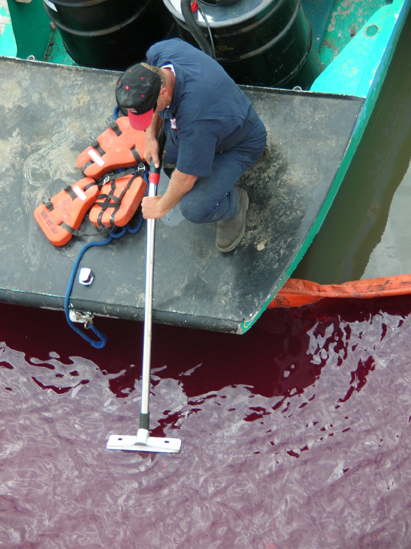
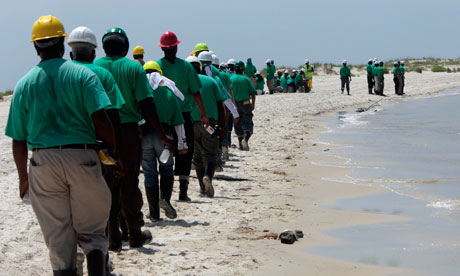
    There have been many oil response workers and volunteers devoting their time to clean up the BP oil spill. But the wildlife are not the only thing in danger. The workers are too. They're at risk to chemical exposure, biological hazards, physical danger and psychological danger.

    The CDC reported on NIOSH's efforts in the clean up:

    NIOSH is protecting workers and volunteers responding to the oil spill in the Gulf of Mexico with the following efforts:

    * Providing information to British Petroleum (BP), the Occupational Safety and Health Administration (OSHA), the U.S. Coast Guard, and other federal and state partners about protecting workers and volunteers from potential safety and health hazards.
    * Assisting OSHA and the National Institute of Environmental Health Sciences (NIEHS) with information about tools for training workers including health hazard risk assessment and personal protective equipment selection
    * Conducting a voluntary survey of workers to obtain a record of those who have participated and a mechanism to contact them about possible spill-related symptoms of illness or injury, as needed.

    For more information click here.

    Wednesday, May 26, 2010

    Dangerous Teen Jobs


    Summer is approaching and that means many teens will begin looking for a job. The National Consumer League coordinated with the Child Labor Coalition to compile the five worst teen jobs. Some of the jobs could be potentially hazardous but some on the list may surprise you.

    2010's Five Worst Teen Jobs

    * Traveling Youth Sales Crews

    * Construction and Height Work

    * Outside Helper: Landscaping, Groundskeeping and Lawn Service

    * Agriculture: Harvesting Crops

    * Driver/Operator: Forklifts, Tractors, and ATV's

    For more details visit Workers Comp Insider.
    Related Posts Plugin for WordPress, Blogger...